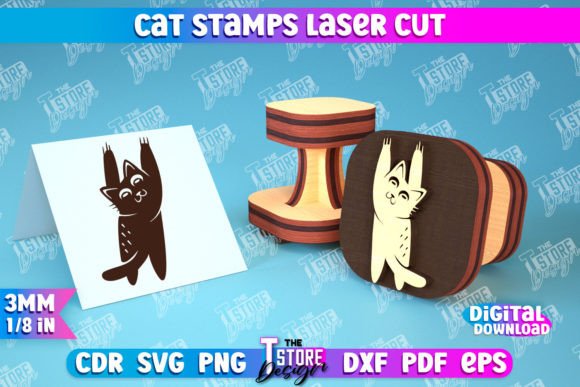
Cat Stamp CNC Design: A Designer’s Review
As a designer who spends half my life digitizing patterns and the other half testing them on actual fabric, I have learned to look past the glossy preview images. When I first opened the Cat Stamp Children s Design CNC File, my initial reaction was one of cautious curiosity. The file is marketed primarily for laser cutting machines under the Art Amp category, with clear instructions that red lines indicate cuts and black lines indicate engraving. However, in the world of modern making, boundaries between mediums are increasingly fluid. I wanted to see if this vector-based stamp design could translate effectively into a machine embroidery design for real-world projects.
First Impressions and Visual Personality
The aesthetic of this file is undeniably charming. It captures that whimsical, hand-stamped look that is currently trending in boutique children’s wear and nursery decor. The lines are clean, suggesting a simplicity that is crucial for both laser cutting and embroidery. For an embroidery project, this simplicity is a double-edged sword. On one hand, it means the design is not overly dense, which reduces puckering on lightweight fabrics. On the other hand, it requires careful digitizing to ensure the "stamp" effect doesn’t look like a generic satin stitch outline.
The mood is playful yet refined. It feels appropriate for a personalized gift or a small shop product that aims for a handmade, artisanal vibe rather than a mass-produced feel. If you are an Etsy seller or a craft business owner, this visual personality fits seamlessly into collections focused on organic materials, neutral tones, and gentle themes.
Real-World Application: The Tote Bag Test
To evaluate the practicality of this design, I imagined applying it to a custom embroidered tote bag. This is a staple item for many small business owners and hobbyists. Using a heavy canvas fabric, the Cat Stamp Children s Design CNC File would need to be scaled appropriately. Since the original file is intended for laser cutting, the proportions are likely fixed for a specific stamp size. In embroidery, we have more flexibility, but we must respect the integrity of the lines.
For a tote bag, I would recommend using a fill stitch for the cat’s body to give it substance, while keeping the outer edges as a running stitch or a light satin stitch to mimic the imperfect edge of a wooden stamp. This approach enhances the visual appeal and ensures the stitching clarity remains high even after frequent washing. Customers reacting to such a product would likely appreciate the texture contrast between the smooth canvas and the raised embroidery, adding perceived value to the finished product.
Fabric Considerations and Technical Challenges
One of the most critical aspects of using any digital embroidery file is understanding how it interacts with fabric texture. This design, with its potentially open spaces and distinct lines, performs best on stable, medium-weight fabrics like cotton twill, denim, or linen. If you attempt to stitch this on stretchy fabric or thin material without proper support, you risk distortion.
When working with textured fabrics, the stitch density becomes paramount. If the design is too sparse, the fabric grain might show through, breaking the illusion of a solid stamp. Conversely, if the digitizer packs too many stitches into the small details, the fabric may pucker. I strongly advise testing the design on scrap fabric first. Check thread color contrast carefully; a monochromatic look (such as cream thread on a beige bag) can look sophisticated, but it requires perfect tension to be legible.
For curved surfaces like caps or hats, this design might pose challenges due to its potentially wide footprint. Caps require narrower, taller designs to fit the front panel properly. Unless the file is significantly resized, it may not fit standard cap hoop sizes without losing detail. Always confirm hoop size compatibility before starting a commercial embroidery project.
Commercial Viability and Brand Consistency
For creative entrepreneurs and apparel decorators, the versatility of this design is a major selling point. It can easily be adapted for sweatshirt embroidery, baby clothes, or even kitchen towels. The key to maintaining brand consistency is how you present the finished product. A well-executed version of this cat stamp design can become a signature element for a boutique brand specializing in children’s items.
However, there is a crucial distinction to make regarding the file type. The product description explicitly states this is a Laser Cutting file with RED line - CUT and BLACK line - ENGRAVE instructions. It is not inherently an embroidery file. To use this for embroidery, you must either manually digitize it from the vector source or use conversion software, ensuring you adjust for stitch types like satin stitch and fill stitch. Never assume a laser file is ready for the embroidery machine. Always check licensing terms before selling finished items or digital products derived from this asset.
Practical Designer Notes for Best Results
If you decide to incorporate this design into your workflow, keep these practical tips in mind:
- Test on Scrap Fabric: Always run a test stitch-out to check for registration issues and thread breaks.
- Stabilizer Selection: Use a cut-away stabilizer for stretchy fabrics like t-shirts and a tear-away for stable woven fabrics like tote bags.
- Thread Choice: Matte threads often look better for "stamp" style designs than shiny rayon, as they mimic the ink-on-paper aesthetic.
- Scale Carefully: Ensure the design fits your intended hoop size without becoming so small that the details merge together.
- Mockups: Create printable mockups in both black and white to verify that the design remains recognizable without color reliance.
Final Verdict
The Cat Stamp Children s Design CNC File is a delightful asset for makers who understand the difference between cutting and stitching vectors. While it is optimized for laser cutting machines, its clean lines and charming theme make it an excellent candidate for manual digitizing into a machine embroidery design. For the experienced designer, it offers a solid foundation for creating high-quality, personalized gifts and small shop products. Just remember to respect the technical requirements of embroidery, from stabilizer choice to stitch density, to ensure your finished product meets professional standards.