Dual Language Program Specialist: A Designer’s Review
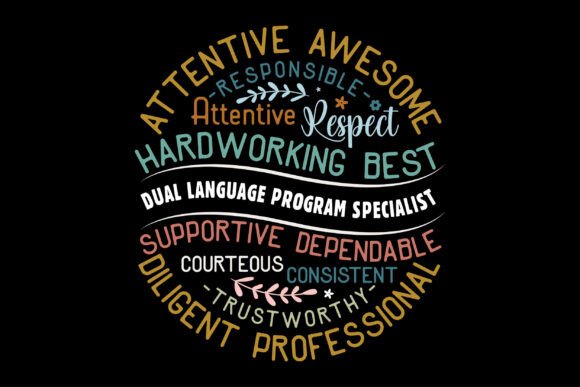
As an embroidery designer who has spent years digitizing and testing files for everything from boutique baby clothes to corporate apparel, I approach every new machine embroidery design with a critical eye. It is not just about whether the image looks good on a screen; it is about how it translates into thread, how it behaves on fabric, and ultimately, how it serves the end user. Today, I am evaluating the Dual Language Program Specialist design, a graphic intended for T-shirts but increasingly popular among crafters looking to expand into personalized gifts and small shop merchandise.
First Impressions and Visual Personality
The first thing that strikes me about the Dual Language Program Specialist graphic is its clear, professional intent. In the world of education and bilingual advocacy, clarity is key. This design does not rely on overly ornate flourishes that might get lost in stitching. Instead, it presents a clean, bold aesthetic that communicates pride and professionalism. For an embroidery project, this is a promising start. Complex, wispy details often turn into a mess of thread breaks and puckering, but a design with strong lines and defined shapes tends to stitch out reliably.
The mood here is celebratory yet grounded. It feels appropriate for a teacher, a program coordinator, or a parent advocate. When I visualize this as a finished product, I see it working best on items that are meant to be worn with pride during school events, conferences, or daily classroom duties. The visual personality suggests durability and respect, which aligns perfectly with the values of the dual language community.
Real-World Application: Beyond the T-Shirt
The product description mentions this is an "Easy print" suitable for sublimation on T-shirts and mugs. However, as an embroiderer, I look at any high-contrast graphic as a potential candidate for stitching. Let us consider a real-life scenario. Imagine you are preparing a custom order for a local elementary school’s dual language immersion night. The client wants something more substantial than a printed tee. They want a keepsake.
In this context, adapting the Dual Language Program Specialist concept into an embroidered patch or directly onto a heavy cotton tote bag design could elevate the perceived value significantly. While the original file may be a raster or vector graphic for printing, the layout informs how we might digitize it for embroidery. If you are using this as a reference for creating a custom embroidery file, the bold typography suggests that a combination of satin stitch for borders and fill stitch for larger lettering areas would work well.
For custom apparel like polo shirts or button-downs, this design could serve as a left-chest logo. On a sweatshirt embroidery project, it could be scaled up for the back, creating a statement piece for staff unity. The versatility of the theme allows it to transition from a simple personalized gift for a retiring teacher to a branded item for a craft business specializing in educational apparel.
Technical Considerations for Stitching
Here is where the rubber meets the road. If you are converting this graphic concept into a stitched reality, or if you are sourcing a similar digital embroidery file, you must consider stitch density and fabric interaction. The term "Specialist" implies precision, and your stitching should reflect that.
- Fabric Texture and Stability: This design likely contains text. Text is unforgiving on textured fabrics like terry cloth towels or loose-weave linens. For best results, use a tight-knit cotton or a stable polyester blend. Always use a cut-away stabilizer for garments that will be washed frequently, such as T-shirts and aprons. For hats or caps, a stiff front stabilizer is non-negotiable to prevent the design from sinking into the foam.
- Thread Colors: Dual language programs often utilize vibrant colors to represent cultural diversity. However, when stitching, contrast is king. Ensure your thread colors stand out against the fabric. If you are stitching on a dark navy sweatshirt, use bright whites, yellows, or metallics. Test your color palette on scrap fabric first. A poor color choice can make even the best design look muddy.
- Hoop Size and Placement: Check the dimensions of your graphic. If you are aiming for a small chest logo, ensure the text remains legible at that size. Tiny lettering can become illegible if the stitch density is too high or if the needle perforates the fabric too aggressively. For larger back prints on hoodies, ensure your hoop size can accommodate the width without requiring excessive re-hooping, which can lead to alignment issues.
Navigating Challenges in Production
While the Dual Language Program Specialist theme is strong, there are areas where caution is required. If you are an Etsy seller or run a small shop product line, you know that returns due to poor quality can hurt your reputation.
Be careful with stretchy fabrics. If you are applying this to a thin, stretchy jersey T-shirt, the tension of the embroidery hoop can distort the garment, leaving permanent hoop marks or causing the fabric to pucker around the stitches. Using a lightweight tear-away stabilizer topped with a fusible interfacing can help mitigate this. Additionally, avoid placing dense stitch areas near seams or zippers, as this can cause needle deflection and broken threads.
Another consideration is the "cleanliness" of the design. In embroidery, less is often more. If the original graphic has intricate shadows or gradients, these do not translate well to thread. You may need to simplify the design, focusing on solid shapes and clear outlines. This is particularly important for baby embroidery items, where softness and comfort are paramount. Heavy, dense stitching can feel scratchy against sensitive skin, so consider using softer threads like rayon or polyester and keeping the stitch count reasonable.
Enhancing Brand Value and Customer Trust
Why go through the trouble of embroidering when printing is easier? The answer lies in perceived value. An embroidered item feels premium. It suggests longevity and care. For a commercial embroidery project, this distinction can justify a higher price point. When a customer receives a beautifully stitched tote bag or apron featuring the Dual Language Program Specialist motif, they perceive it as a high-quality handmade product rather than a mass-produced commodity.
This attention to detail builds customer trust. It shows that you, the creator, have invested time and skill into the product. For holiday embroidery gifts, such as a Christmas present for a bilingual educator, the tactile nature of embroidery adds an emotional layer that print cannot match. It becomes a heirloom, not just merchandise.
Practical Designer Notes for Success
Before you launch this design into your production queue, take these final steps to ensure success:
- Test on Scrap Fabric: Never stitch directly on your final garment without a test run. Use the same fabric and stabilizer combination you plan to use for the final product.
- Check Licensing: The product description mentions "Home Ready Print," but it is crucial to confirm licensing terms if you plan to sell finished items. Ensure you have the right to use the design for commercial embroidery purposes. If you are digitizing it yourself from a graphic, ensure the original graphic license allows for derivative works.
- Mockup Verification: Create printable mockup images or digital previews showing the design on various products. This helps customers visualize the final result and reduces confusion.
- Inspect Small Details: Zoom in on your digitized file. Look for overlapping stitches, unnecessary jumps, or areas where the underlay might show through. Clean up the file to ensure smooth operation on the machine.
In conclusion, the Dual Language Program Specialist concept offers a meaningful and marketable avenue for embroidery designers and makers. By respecting the technical limitations of the medium and focusing on quality execution, you can transform a simple graphic into a cherished personalized gift or a standout item in your design assets portfolio. Whether for a holiday gift, a boutique branding effort, or a custom apparel order, the key is in the details. Stitch with intention, and your finished products will speak volumes.